

How can a referral campaign use real archive-access deadlines responsibly?
By making the deadline the client's, not yours. A responsible campaign starts from a documented event in the client's own systems, verifies the date in writing, and offers licensing as one option among keep, migrate or delete, while the records still exist to decide about.
Archive events are real decision points. When a cloud subscription lapses or a free plan trims history, records that nobody has looked at for years either move, stay readable, or go. Licensing is an option only while they exist, and that is a legitimate reason to raise it on time. It stops being legitimate the moment the urgency comes from the referrer rather than the calendar.
What a verified deadline looks like
Vendors publish lifecycles, and those are the dates to check. Two examples, both from the vendors' own documentation, checked 2026-10-18:
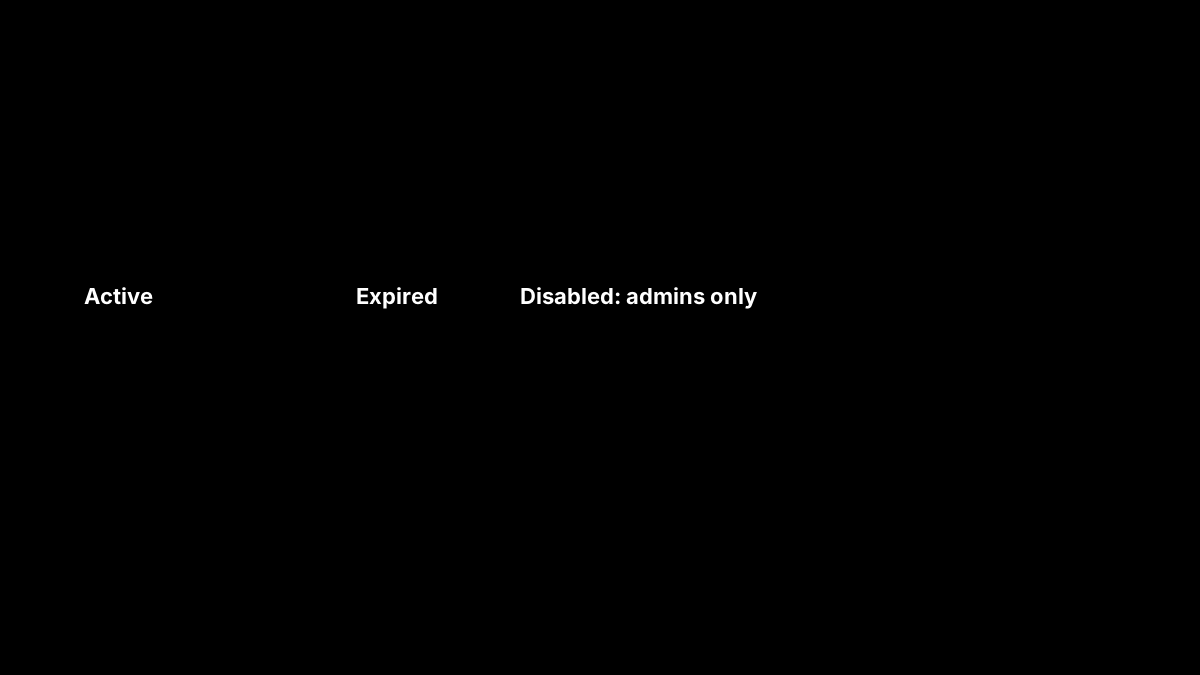
- Microsoft 365 business subscriptions move through Active, Expired, Disabled and Deleted. While Disabled, only admins can reach the data; after deletion, the subscription cannot be reactivated and a new subscription does not bring the data back. Microsoft says it keeps data for 90 days after a paid subscription ends so the customer can extract it, and deletes it no later than 180 days after expiration. For most business subscriptions the standard stages are 30 days Expired and 90 days Disabled, but stage lengths differ by purchase channel, and canceling early moves a subscription straight to Disabled, so the client's own admin center is the source for their date.
- Slack free workspaces show only the most recent 90 days of messages and files, and Slack permanently deletes messages and files more than one year old. For a company that downgraded, the rolling one-year line is the date that matters; the guide on Slack downgrades covers that case.
 Microsoft 365
 Slack
Both examples are about access and deletion schedules, not about licensing. They tell an introducer when a decision has to be made, nothing about whether the records would be licensable.
The deadline verification log
This is the campaign's working record. Fill one row per client before any message goes out. Illustrative entries for fictional clients of an MSP.
| Client (illustrative) | Documented event | Where the date comes from | Date confirmed in writing by | Decision owner | Message allowed |
|---|---|---|---|---|---|
| 240-person engineering consultancy | Legacy email archive contract ends | Vendor renewal notice in the client's files | Client IT manager, by email | Managing partner | Event, date and source |
| 130-person freight broker | Business cloud subscription not renewed | Client's admin center lifecycle stage | Client operations director | CEO | Event and stage; date pending confirmation |
| 410-person staffing firm | Helpdesk platform retirement after migration | Project plan with cutover date | Client project lead | COO | Event, date and source |
| 35-person agency | Downgraded chat workspace to free plan | Vendor's published free-plan limits | Not yet confirmed | Founder | Event only, no date |
The last row also fails the size rule (see below), which is the point of logging before messaging: a verified deadline does not make a company eligible.
What the message may and may not say
The Federal Trade Commission's 2022 staff report on dark patterns lists false scarcity, such as invented low-stock claims, and false urgency, such as baseless countdown timers and false limited-time messages, among deceptive design practices. A referral campaign is not a shopping site, but the same lines apply.
| Allowed | Not allowed |
|---|---|
| "Your archive contract ends on the date in your renewal notice" | "Only a few licensing slots are left this quarter" |
| "Once the vendor deletes the tenant, the history cannot be restored" | "SourceX needs an answer by Friday" |
| "If you want to assess licensing, it has to happen before that date" | A countdown to a date you have not verified |
| "Keeping, migrating or deleting are all reasonable choices" | Implying licensing is the default or expected outcome |
| "Check legal holds and retention rules with counsel first" | Suggesting records be kept or deleted to suit a deal |
The permission step comes before any of this. Ask the owner whether they want to hear about a licensing option at all; if not, the campaign stops for that client.
A campaign sequence built on the log
- Segment by event, not by list. Include only clients with a documented access or deletion event in the next few months.
- Verify each date. Record the source and who confirmed it. No confirmation, no date in the message.
- Ask permission. One plain question: would they like to hear about licensing the records before the event?
- Send one message tied to their event. Name the event, the source of the date and the options. Disclose your referral relationship in the body.
- Introduce only with consent. If the owner agrees, introduce the decision owner to SourceX; partners never collect or handle the records.
- Close the row. Record the decision, including no, and do not follow up past the event.
For email archives in particular, the email archive migration guide has a month-by-month migration timeline; this page is about running the same decision across a client base. Helpdesk retirements are covered in historical tickets for AI support agents.
Which archived companies qualify, and who decides?
Size and rights decide, not the deadline. The company needs 50+ full-time employees at peak (contractors excluded), a documented operating history, rights to license the records and an authorized contact. Companies in the U.S., Canada and the EU qualify, as do companies in the UK, Australia, New Zealand, India, Singapore, South Africa, Latin America, the UAE and Saudi Arabia when at least 70% of the data is in English.
Note at metadata level only: which system holds the archive, how many years it spans, roughly how much there is, whether an original export will survive the event, and which executive owns the decision. Whether old archived data can be licensed and whether an email archive is suitable depend on the rights review. What stays unknown until SourceX reviews it: demand for those records, the rights result, the offer and any reward.
What the deadline does not change
The company's payout is set in its own agreement, and SourceX pays any referral reward separately, so a rushed decision does not improve anyone's terms. A lead, meeting or signed agreement alone does not earn a reward. Illustrative: if a company were later paid $120,000 for a completed handoff, the reward would be $56,000, and the archive deadline would have played no part in that number. More guides are on the guides hub.
Next step
Refer a company. No cap on rewards. Default reward on a company's first qualifying transaction: the greater of $50,000 plus 5% and 15% of Actual Supplier Payout, with no cap; further qualifying transactions first agreed within 12 months of the first Closing pay 15%. Eligibility and payment conditions apply, including the USD 100,000 Minimum Transaction, and a signed Schedule A or addendum can differ. A lead, meeting or signature alone does not trigger payment.
When a client's access or deletion date is verified and the owner has agreed to hear about licensing, register as a partner, check the company against who qualifies, and keep the program terms with your deadline log.